
Book presentation
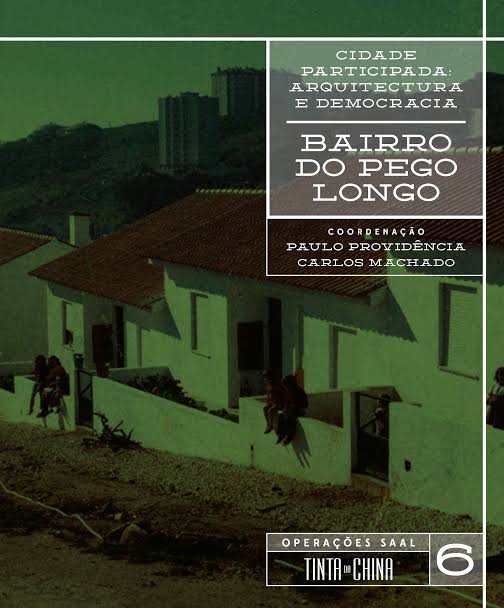
«Cidade Participada: Arquitectura e Democracia — Pego Longo». Eds. Paulo Providência and Carlos Machado.
September 17, 2026, 17h00
North | South Library Foyer, CES | Alta
Presentation of the new volume in the series published by Tinta da China, dedicated to the SAAL Operations - the major democratic housing project in Portugal - the case of Pego Longo.
The session will be moderated by José Reis (FEUC/CES), and will feature a presentation by José António Bandeirinha (CES/DArq), as well as papers by Carlos Machado and Paulo Providência (CES/DArq). A short video (7 minutes) will also be screened, featuring extracts from an interview with architect Bartolomeu Costa Cabral.
About the book
A unique urban and social experiment, the SAAL Projects began in the aftermath of 25 April. It was a process of unique characteristics, resulting from a long struggle and collective reflection by local communities, alongside multidisciplinary teams that included architects such as Álvaro Siza, Bartolomeu Costa Cabral, Gonçalo Byrne, Manuel Correia Fernandes, Manuel Vicente and Raúl Hestnes Ferreira. Cidade Participada: Arquitectura e Democracia records and documents the processes of the SAAL Operations, profiles the communities involved, and reflects on the diversity and consequences of this immense architectural and democratic initiative.
The SAAL process, which is the subject of this volume, took place on the border between the municipalities of Sintra and Oeiras. Drawing on a vast selection of archival material, a site visit and conversations with the project’s architect, the book records its current state, the ongoing need for adaptation and the specific characteristics of the Pego Longo case. Bartolomeu da Costa Cabral, the architect in charge, saw in SAAL the virtue of effective community participation, listening to people’s aspirations and desires. The architect’s role was therefore to translate these faithfully, taking into account the references in the ‘site study’ - which, given its importance, is published here in full - to a deep-rooted sense of connection to the urban periphery, to the small-scale domestic setting of vegetable gardens and the ‘vivenda’, and to the spatial richness of the indeterminate and diverse.